
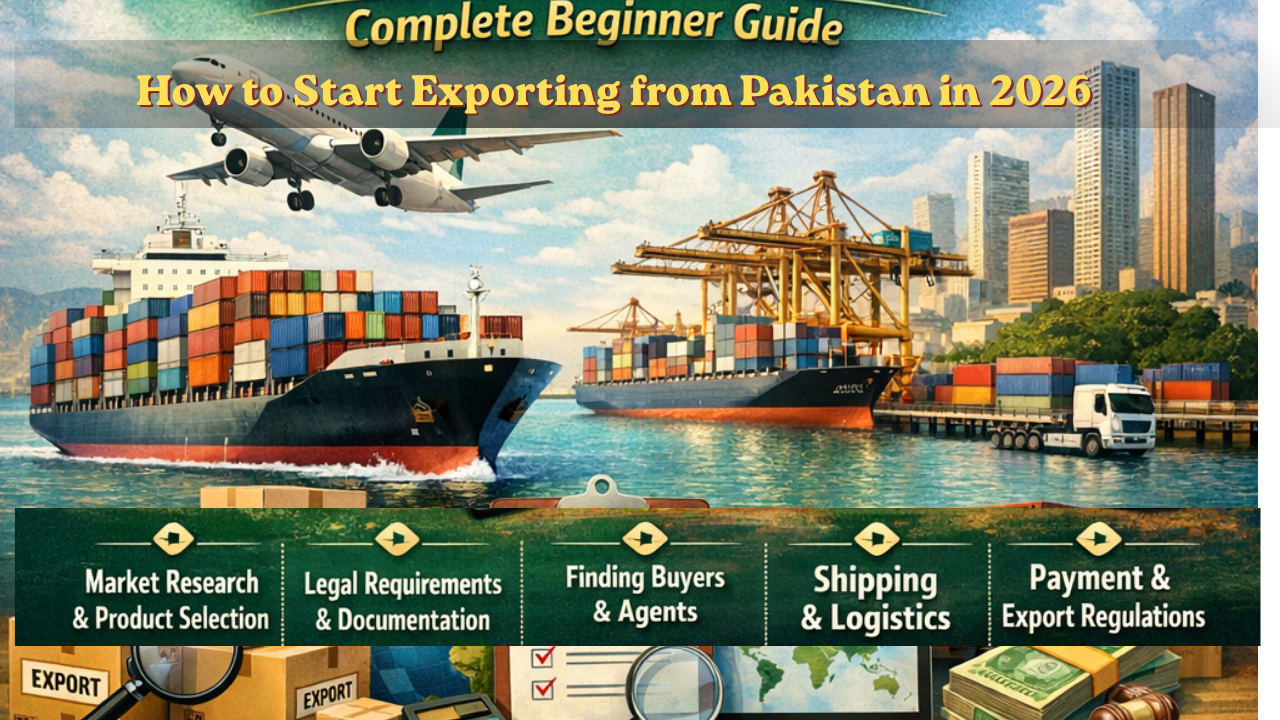
Starting an export business in Pakistan may seem complicated at first, but with the right guidance, it becomes much easier. Whether you’re a manufacturer, trader, entrepreneur, freelancer, or startup founder, this guide will walk you through the complete export process in simple language.
A few years ago, I was sitting in my office in Islamabad with a spreadsheet full of product prices, a WhatsApp inbox filled with buyer inquiries from different countries, and absolutely no idea how those products would actually reach an international customer.
I had products.
I had buyers showing interest.
But I had no understanding of SECP registration, WeBOC, Pakistan Single Window (PSW), customs documentation, or why my bank suddenly asked for Form-E before releasing my export payment.
If this sounds familiar, don’t worry.
Almost every new exporter in Pakistan starts exactly the same way—great product, zero knowledge of the export process.
The good news?
Nobody is born knowing HS Codes, commercial invoices, customs clearance, or international shipping.
Every successful exporter learns by making mistakes.
This guide contains everything I wish someone had explained to me before my first shipment.
No complicated terminology.
No unnecessary theory.
Just practical steps that actually work.
Why 2026 Is a Great Time to Start Exporting from Pakistan
Many people claim that “this is the best year to start exporting.”
Most of the time it’s marketing.
However, 2026 genuinely offers several advantages for Pakistani exporters.
1. Pakistan’s Export Process Has Become More Digital
Over the last few years, Pakistan has modernized many export procedures.
Today, exporters can complete much of their documentation online through:
- Pakistan Single Window (PSW)
- WeBOC
- FBR Online Services
- State Bank Digital Systems
What once required visiting multiple government offices can now be completed from your office or even your home.
While the system is not perfect, it is significantly easier than it was five years ago.
2. Global Buyers Are Looking Beyond Traditional Suppliers
International buyers in:
- United States
- European Union
- GCC Countries
- Australia
- Africa
are increasingly diversifying their sourcing.
Pakistan is gaining recognition for producing quality products at competitive prices.
Demand continues to grow for:
- Surgical Instruments
- Dental Instruments
- Sports Goods
- Textiles
- Leather Products
- Rice
- Himalayan Pink Salt
- Food Products
- Herbal & Wellness Products
- IT Services
I’ve personally noticed buyers who previously sourced only from other countries now actively requesting quotations from Pakistani suppliers.
Step 1: Decide What You Want to Export
Don’t Choose Products Because They Sound Attractive
One of the biggest mistakes beginners make is selecting products based on excitement rather than opportunity.
I’ve seen people decide to export gemstones or handicrafts simply because they appear profitable, even though they have no suppliers or industry experience.
Instead, ask yourself these questions:
- Do I already know reliable manufacturers?
- Can I maintain consistent quality?
- Can I offer competitive prices?
- Can I fulfill repeat orders?
Pakistan already has strong export industries.
Some of the best export products include:
- Surgical & Dental Instruments
- Textiles & Garments
- Leather Goods
- Sports Goods
- Rice
- Spices
- Himalayan Pink Salt
- Honey
- Shilajit & Herbal Products
- Fruits & Vegetables
- Software & IT Services
Remember: Finding reliable suppliers is much more difficult than completing registrations.
Spend time researching before investing money.
Step 2: Register Your Export Business
Many people fear this stage.
In reality, it’s quite manageable when broken into steps.
1. Register Your Business
You can register your business through:
- Sole Proprietorship
- Partnership
- Private Limited Company (SECP)
Along with registration, obtain your:
- National Tax Number (NTN)
- Sales Tax Registration (if applicable)
These will be required throughout your export journey.
2. Join Your Local Chamber of Commerce
Examples include:
- Islamabad Chamber of Commerce & Industry (ICCI)
- Lahore Chamber
- Karachi Chamber
- Sialkot Chamber
Membership provides access to:
- Certificate of Origin
- Networking Events
- Export Seminars
- Trade Delegations
- Government Notifications
Many overseas buyers also ask for documentation issued through chambers of commerce.
3. Register with TDAP
The Trade Development Authority of Pakistan (TDAP) supports exporters through:
- International Trade Fairs
- Buyer-Seller Meetings
- Export Training
- Market Research
- Government Incentive Programs
Many new exporters overlook TDAP, yet it offers valuable support for businesses entering global markets.
4. Open Your WeBOC Account
WeBOC (Web-Based One Customs) is Pakistan’s customs clearance system.
Without WeBOC registration, your goods cannot legally pass through customs for export.
Although freight forwarders often manage this process, understanding how WeBOC works will save you time, money, and unnecessary dependence on third parties.
5. Register on Pakistan Single Window (PSW)
Pakistan Single Window connects multiple government departments through one digital platform.
Instead of visiting separate offices, exporters can complete many approvals through a single portal.
This has significantly simplified the export process.
A Lesson From My First Shipment
During my first export attempt, I underestimated the importance of WeBOC and PSW.
The result?
I paid additional fees to a clearing agent simply because my documentation wasn’t prepared correctly.
Looking back, spending a weekend learning the system would have saved both money and stress.
Step 3: Find International Buyers
This is where most exporters struggle.
Completing registrations doesn’t automatically bring customers.
Finding buyers requires consistent effort.
Use B2B Marketplaces
Popular platforms include:
- Alibaba
- TradeKey
- Global Sources
These platforms generate genuine inquiries, although you’ll also encounter many non-serious buyers.
Patience is essential.
Leverage LinkedIn
LinkedIn has become one of the most effective B2B networking tools.
Instead of sending spam messages, connect professionally with:
- Procurement Managers
- Import Managers
- Purchasing Directors
- Business Owners
A personalized message often performs much better than mass marketing.
Attend Trade Exhibitions
Trade fairs remain one of the best ways to establish credibility.
Participating in:
- TDAP exhibitions
- International trade shows
- Virtual buyer meetings
can lead to long-term business relationships.
Several of my own export opportunities originated from trade events.

Build Your Own Export Presence
Having your own export-focused website builds trust.
Include:
- Product Catalog
- Company Profile
- Certifications
- Factory Photos
- Contact Information
- Inquiry Forms
Many buyers prefer dealing directly with manufacturers rather than marketplace listings.
How to Identify Serious Buyers
Not every inquiry deserves equal attention.
A serious buyer usually asks about:
- Minimum Order Quantity (MOQ)
- Product Specifications
- Samples
- Delivery Time
- Payment Terms
Time-wasters often ask only for prices and disappear.
Learning to recognize the difference will save countless hours.
Step 4: Understand Export Payments
Payment issues are among the biggest concerns for new exporters.
Understanding the basics helps protect your business.
Know About Form-E
For most exports from Pakistan, Form-E is mandatory.
It enables the State Bank of Pakistan to monitor foreign exchange earnings.
Your bank will assist with the process, but knowing about it beforehand prevents unnecessary confusion.
Choose Safe Payment Methods
For first-time buyers, consider:
- Advance Payment
- Letter of Credit (LC)
Although some buyers may request open credit terms, protecting your cash flow should always come first.
Price Your Products Correctly
Many beginners reduce prices excessively just to secure their first order.
I made the same mistake.
After deducting:
- Freight Charges
- Banking Fees
- Documentation Costs
- Packaging Expenses
there was almost no profit left.
Price your products for long-term sustainability—not just to win one order.
Step 5: Packaging and Shipping
Good packaging protects more than your products.
It protects your reputation.
Damaged goods often result in lost customers and negative impressions.
Invest in export-quality packaging from the beginning.
Choose an Experienced Freight Forwarder
A reliable freight forwarder helps with:
- Shipping Documentation
- Customs Clearance
- Container Booking
- Freight Rates
- Destination Regulations
Ask experienced exporters for recommendations before selecting one.
The right logistics partner can make international shipping far smoother.
Common Mistakes New Exporters Make
Avoid these mistakes to save time and money.
Registering Before Validating Demand
Talk to potential buyers before investing heavily in registrations.
Ignoring Export Documentation
Become familiar with documents such as:
- Commercial Invoice
- Packing List
- Certificate of Origin
- Bill of Lading
- Form-E
Proper documentation prevents shipment delays.
Expecting Instant Orders
International buyers rarely place large orders immediately.
Building trust often takes weeks or even months.
Stay patient.
Ignoring Government Incentives
Pakistan offers several export support programs, including:
- Export Facilitation Scheme (EFS)
- Duty Drawback Programs
- TDAP Assistance
- Export Development Initiatives
Many exporters miss these simply because they never research them.
Trying to Handle Everything Alone
Experienced customs agents, freight forwarders, chamber members, and fellow exporters can provide valuable guidance.
Learning from others is far cheaper than learning from costly mistakes.
Bonus Tips for First-Time Exporters
Before accepting your first international order:
✅ Verify the buyer.
✅ Request advance payment whenever possible.
✅ Keep product specifications in writing.
✅ Use professional invoices.
✅ Communicate clearly.
✅ Never promise delivery dates you cannot meet.
✅ Build long-term relationships instead of chasing quick profits.
Final Thoughts
Exporting from Pakistan in 2026 is more accessible than ever before.
While challenges still exist, modern digital systems, expanding international demand, and government support have made the journey considerably smoother for new exporters.
Success doesn’t come from rushing into large shipments.
It comes from building a strong foundation.
Complete your paperwork carefully.
Understand the documentation.
Choose reliable suppliers.
Develop genuine relationships with buyers.
Ship consistently.
Protect your reputation.
Most successful Pakistani exporters didn’t become successful overnight.
They started with one customer, one shipment, and one satisfied buyer at a time.
If you’re serious about building an international business, there has never been a better time to begin your export journey.
Frequently Asked Questions (FAQs)
1. Can I start exporting from Pakistan without a company?
Yes. Many small exporters begin as sole proprietors before expanding into registered companies as their business grows.
2. Which products are most profitable to export from Pakistan?
Surgical instruments, textiles, sports goods, leather products, rice, Himalayan pink salt, spices, honey, herbal products, and IT services remain among Pakistan’s strongest export sectors.
3. Do I need WeBOC to export?
Yes. WeBOC is essential for customs clearance of export shipments.
4. What is Form-E?
Form-E is an export document used by the State Bank of Pakistan to monitor foreign exchange proceeds from exports.
5. How do I find international buyers?
You can find buyers through B2B marketplaces, LinkedIn, trade fairs, export promotion events, referrals, and your own professional export website.
Ready to Start Your Export Journey?
Whether you’re planning to export surgical instruments, textiles, food products, leather goods, sports equipment, herbal products, or IT services, taking the first step is the most important.
Start small, stay compliant, keep learning, and focus on building long-term relationships with international buyers. Consistency and professionalism will always outperform shortcuts in the export business.