
The Classic “Who Sells To Whom” Models
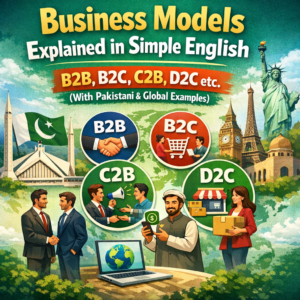
1. B2B (Business-to-Business) This is selling stuff to other companies, not regular people. Think bulk orders, invoices, and long sales cycles. My own export business runs on this — I sell surgical instruments to hospitals and distributors, not walk-in customers.
- Pakistan example: Engro Corporation selling fertilizers to farms and distributors
- Global example: Salesforce selling CRM software to companies
2. B2C (Business-to-Consumer) Regular retail, selling directly to the end customer who’s going to actually use the thing. Simple, fast, emotional buying decisions.
- Pakistan example: Khaadi selling clothes directly to shoppers
- Global example: Nike selling shoes to customers online and in stores
3. C2C (Consumer-to-Consumer) People selling to other people, with a platform just facilitating it in the middle. I’ve bought and sold used cameras this way more times than I can count.
- Pakistan example: OLX Pakistan for used bikes, phones, furniture
- Global example: eBay for collectibles and used goods
4. C2B (Consumer-to-Business) This flips the usual direction — individuals offer something and businesses pay for it. Freelancing falls here too.
- Pakistan example: Freelancers on Fiverr from Lahore selling logo design to foreign companies
- Global example: Getty Images buying photos from independent photographers
5. D2C / DTC (Direct-to-Consumer) Brand skips the middleman completely and sells straight to you, usually online. No distributors, no retail markup eating into profits.
- Pakistan example: WS Naturals selling wellness products directly through our own site rather than through pharmacies
- Global example: Warby Parker selling glasses directly online
6. B2B2C (Business-to-Business-to-Consumer) A business sells through another business, but the end consumer still knows and interacts with the original brand.
- Pakistan example: A local skincare brand selling through Daraz but the customer still recognizes and trusts the actual brand
- Global example: Instacart delivering groceries on behalf of actual grocery chains
Government-Involved Models (Yes, These Exist Too)
7. B2G (Business-to-Government) Selling products or services to government departments. Slower payments, heavier paperwork, but stable big contracts.
- Pakistan example: NRTC supplying telecom infrastructure to government bodies
- Global example: Lockheed Martin supplying defense equipment to the US government
8. G2B (Government-to-Business) Government providing services or platforms to help businesses function — licensing, tax portals, that sort of thing.
- Pakistan example: FBR’s IRIS portal for business tax filing
- Global example: USA’s SAM.gov for business federal contracting registration
9. G2C (Government-to-Consumer) Government services delivered straight to citizens, often digitized now.
- Pakistan example: NADRA’s online CNIC and passport services
- Global example: UK’s GOV.UK portal for citizen services
10. C2G (Consumer-to-Government) Citizens paying or submitting things to government — taxes, fines, applications.
- Pakistan example: Paying property tax through the Excise and Taxation e-portal
- Global example: Filing taxes through IRS e-file in the US
11. B2E (Business-to-Employee) Companies offering internal services, tools, or perks specifically to their own staff.
- Pakistan example: Systems Limited’s internal learning and HR portals for employees
- Global example: Google’s internal tools and employee perks programs
Software and Tech-Delivery Models
12. B2B SaaS Subscription software sold to other businesses to solve a work problem. Recurring revenue is the whole appeal here.
- Pakistan example: Nile Secure offering cybersecurity monitoring as a subscription to companies
- Global example: Slack selling team communication software to companies
13. B2C SaaS Same subscription software idea, but sold directly to individual users.
- Pakistan example: Bykea’s app subscription-style rider features
- Global example: Netflix, obviously, selling streaming subscriptions to individuals
14. Marketplace Model A platform that connects buyers and sellers and takes a cut, without owning the actual inventory.
- Pakistan example: Daraz connecting thousands of sellers with buyers
- Global example: Amazon Marketplace hosting third-party sellers
15. Aggregator Model Similar to marketplace but the platform controls quality, pricing, and branding more tightly, even though it doesn’t own the assets.
- Pakistan example: Airlift (before it shut down) aggregating local delivery
- Global example: Uber aggregating independent drivers under one consistent experience
16. Subscription Model Customers pay recurring fees for continued access to a product or service instead of one-time buying.
- Pakistan example: Tapmad TV subscription for sports and entertainment
- Global example: Spotify Premium monthly subscription
17. Freemium Model Free basic version to hook users, paid tiers for advanced features. I’ve used this trick myself for a lead magnet tool and it works surprisingly well for building an email list fast.
- Pakistan example: PakWheels’ basic listings free, premium ads paid
- Global example: LinkedIn’s free profile with paid Premium tiers
18. Licensing Model You let another company use your brand, tech, or IP for a fee, without running the operations yourself.
- Pakistan example: A local bakery licensing a foreign dessert brand’s recipe and name
- Global example: Disney licensing characters for toys and merchandise worldwide
19. Franchise Model Someone buys the rights to run your business under your brand and system, usually paying an upfront fee plus royalties.
- Pakistan example: Cheezious expanding through franchise outlets across cities
- Global example: McDonald’s franchise model operating in over 100 countries
